
Disaster Mapping
Helping Cities Plan and Prepare for potential Worst Case Scenarios
Disaster Mapping
We anticipate both man-made and natural disasters, determine their risks, and help cities to plan resilience strategies to combat them. We also help clients to collect pre and post disaster satellite and drone images to support disaster response, recovery and rebuild efforts.
- We collect pre and post disaster images for disaster damage assessment
- We use machine learning algorithms to automate features extraction and to create actionable insights from satellites and drone images
- We work with cities on resilience strategies by following anticipatory spatial practices.
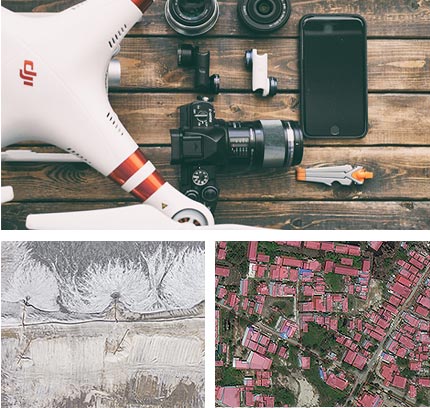

A Deeper Look Into Disaster Mapping
As the world continues to experience the impacts of climate change, the intensity and unpredictability of natural disaster are also increasing. Scientist, governments and several organizations around the world are concerned; they are looking for innovative ideas to provide timely damage assessment after a disaster occurs. Two of the latest innovations that have been considered are machine learning and drones. Our approach speeds up the process of collecting and extracting information from big data such as drone and satellite images.
Drone and satellite images are used for performing building damage assessments. For example, after the Haiti Earthquake in 2010, building damage information was extracted from high resolution images using crowd sourcing. The process took over 600 volunteers, working for several days, to identify damage buildings on satellite images. In contrast, machine learning approach learns using the volunteers’ approach and then performs the same tasks automatically, while improving quality.
The challenges of climate change and un-anticipated urban shocks now requires that city managers, engineers, and planners have immediate access to spatial data and the ability to extract information from them. EarthNumerics partners with cities and government agencies to face these challenges.
Why Be Prepared...
- The annual average amount of Atlantic hurricanes is 6.5 and major hurricanes is 2.
- The annual average amount of Atlantic named storms is 12.
(source Stormfax Weather Almanac) - In the last century the global sea level has risen approximately 8 inches.
(source NASA)